

Industrial is Showing Signs of Stronger Fundamentals and Favorable Momentum | Winter 2026
The industrial sector continues to outperform other major commercial real estate asset classes across California. Demand is expected to grow faster than supply in both Northern and Southern California, vacancy rates remain low or are projected to decline further, and rental growth is expected to persist at or near inflation across most markets. While industrial development activity has been restrained over the past year, particularly in Northern California — forward-looking indicators point to renewed project pipelines. Capital market pressures appear to be easing, especially in Southern California, even as concerns over building costs remain. Supported by sustained e-commerce demand and growing interest in data centers and digital infrastructure, the industrial sector enters 2026 with comparatively strong fundamentals and favorable momentum relative to other property types. Andrew Morrow, Executive Managing Director, Cushman & Wakefield and Joey Reaume, EVP and Principal, SRS Industrial join us to discuss these and other themes impacting the industrial sector in the Winter 2026 Allen Matkins/UCLA Anderson Forecast California Commercial Real Estate Survey.
What kind of trends are you seeing in the industrial markets for 2026?
Andrew: We're starting to see more activity across the board. There were a lot of headwinds last year, to say the least. The tariffs really affected our industrial market in the Inland Empire and across Southern California but this year we’re seeing renewed optimism. Companies that were holding off decisions, trying to maintain costs or keep costs down, are now finally having to execute. We should see some more activity, which I think will help consolidate and buoy the market.
Joey: We think landlords will start to pull back on free rent, on tenant improvements, and on moving allowances. We've already started to see security deposits go back up for people who have less than great credit or no credit, so we think that landlords are getting a little bit more bullish on the market, looking forward to 2026, 2027.
So we’ve put the bottom behind us?
Andrew: We hope so. There's still almost 16 million square feet of sublease space that's been sitting kind of stagnant on the market, so all that has to clear. I think there's going to be a wider separation between lease rates in the West and the East, which historically has been the case.
The other dynamic that's at play is that there's no new construction. We went from a historic high of 40 million square feet a couple of years ago to just two million square feet of construction this past year, so that's a drastic change in the market. But where land values, construction costs, and rental rates are, that formula really doesn't make sense, so there could be a scenario maybe later this year or in the future where there's somewhat of a constricted pipeline of that new construction and we start to see rents go back up.
Joey: If you take a look at a particular metric – 200,000 square feet and above – for the Inland Empire in the five years prior to COVID, we had a steady activity rate of around 50 to 55 average deals per year. During the height of COVID, we completed 125 deals. In 2023, we had somewhere around 20 to 25 deals done, then about 79 deals in 2025. So from an activity standpoint, the Inland Empire was relatively on fire and is continuing to move and progress towards that for 2026.
The majority of products and uses in 2025 were Chinese third-party logistics companies (3PLs). Do you see any change in 2026 in terms of new uses?
Andrew: I would say we're seeing more of the typical logistics users and some of the Fortune 500 companies come back to the market, where they were quiet last year. A lot of projects were canceled or delayed, and this year we're seeing those projects come back online. But many of our national clients are starting to shift demand to other major port markets outside of Southern California, given the costs and labor and everything make it so expensive to do business here.
Joey: With regard to tenants, 3PLs have been the market leader for sure. We are seeing a lot more manufacturing come back to the market. We haven't seen that on the actual comp sheet as far as buildings being taken down by manufacturers, but those plans are made multiple years in advance, so we are seeing those companies out making those changes and looking for space, looking forward. We do think that will continue.
In terms of markets, you mentioned the East versus the West and the Empire. Is there a particular jurisdiction, city, or area that you think is going to be a lot more active than others?
Andrew: The West, I think, will continue to keep strong, and the rates are definitely at a higher point. If you're in a larger size range, like above a million square feet, there are only two options, so it really depends on the size range and the area you're looking in.
Joey: Something that we're not really seeing in our market but more in tertiary markets and in the Midwest and East Coast are data centers and battery storage sites. Very niche, very complicated, multiple years in advance of planning, dealing with municipalities, but it’s something we are seeing.
Are you seeing any changes in the market?
Andrew: There aren’t a lot of changes in our market in Southern California. Most of these businesses are really port-driven and logistics-driven and have to be near their consumer base, so we haven't really seen a lot of manufacturing activity here. The one thing we have noticed that I think is different is that owner-users are starting to find opportunities to purchase. That has always been a very institutionally controlled part of the market and companies have usually not been able to participate but we're now starting to see some opportunity for users to actually purchase or build their own sites.
Joey: It used to be a market of clear heights, dock doors, ESFR packages. Now we are seeing more trailer parking and energy for sure. That's for manufacturing as well for automation in regard to all the types of things that we see in Amazon and other types of manufacturing facilities.
Any parting words as we move further into 2026? Are you feeling good? Lukewarm?
Andrew: Somewhere in between. I think things will be a little easier, and we'll see a little bit of growth in the market. Last year, everyone was kind of hunkered down, and there was just too much uncertainty to make long-term decisions. This year, activity is stronger. Our clients are making the decision to execute, and we are putting together those strategies in a more forward-looking way.
Joey: We feel pretty good about the market going forward. When you look at the progress in the Inland Empire and the South Bay, we feel like 2026 will be a year of stabilization, and hopefully it will start to materialize throughout the rest of the LA basin. We also think that the market rates again in the West for sure will stabilize. Maybe it'll uptick at the end of Q4, but I think we'll really see market concessions
Contributors
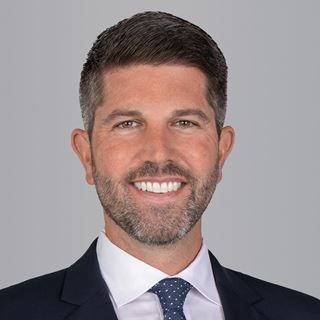
Andrew Morrow
Executive Managing Director
Cushman & Wakefield
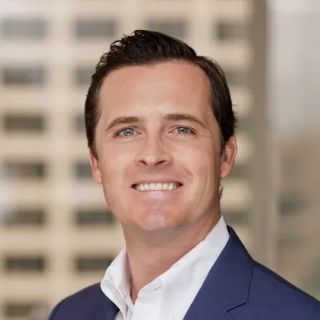
Joey Reaume
EVP and Principal
SRS Industrial
View More Insights
