Allen Matkins
ProfessionalsIndustries & ServicesNews & InsightsCareers

  • Professionals
  • Industries & Services
  • News & Insights
  • Careers
  • Offices
  • About
Manage Subscriptions

News & Insights

Press, Media, & Articles

Video Recap of Bisnow's SoCal Industrial Summit

John C. Condas served as moderator

Press Mention

11.21.13

Bisnow SoCal Industrial Summit Allen Matkins 
Big box is still tops, but smaller buildings are making a comeback, according to the development panel at last week's Bisnow SoCal Industrial Summit.


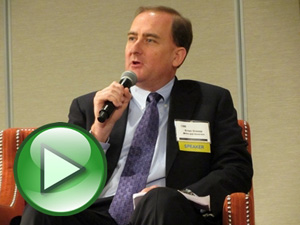
Kim SnyderPrologis president-Southwest Kim Snyder says large-floorplate buildings still outperform mid-sized and smaller buildings in absorption. The search for land has developers buying sites with buildings and bones—semi-functional leased buildings—and banking them until they can demo to put up a Class-A building.


Tom Bak
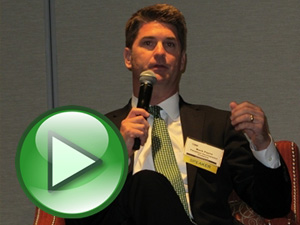
Trammell Crow senior managing director Tom Bak is bullish on buildings over 500k SF; he recently signed a 1.25M SF logistics lease with Amazon.com. For 1M SF users, rent's an insignificant factor; many look for the best way to provide same-day delivery. Brownfield and infill development are also part of TCC's focus.


Mark Payne
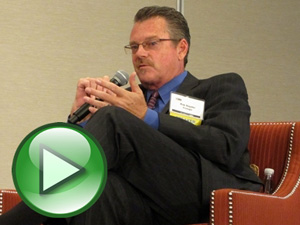
It's all about large format buildings in the Inland Empire, where partner Mark Payne says Panattoni Development recently herded kittens—assembling 20 different land owners for a project. Noting the smaller products market seems to be coming back, Mark says that in infill markets like LA he'll buy sites as small as 2.5 acres.


Brad Koehler
Cassidy Turley VP Brad Koehler says some areas have no buildings larger than 100k SF available, where the same area will have five or six 50k SF buildings and no takers. The $0.10/SF premium for larger building is almost across the board, and in the Inland Empire, the top-down dynamic is moving into buildings below 100k SF.

Brian CresaWhile overall construction costs are significantly below 2008, Millie and Severson president Brian Cresap sees a tightening of the labor market, particularly in the Inland Empire. Non-union subs are unable to find enough qualified workers at their old, lower pay scales. That said, some smaller subs are intentionally capping their staffs at 49 due to Obamacare. John Condas
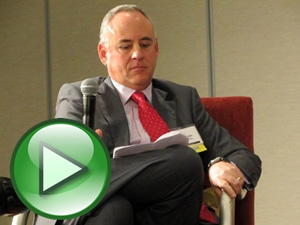
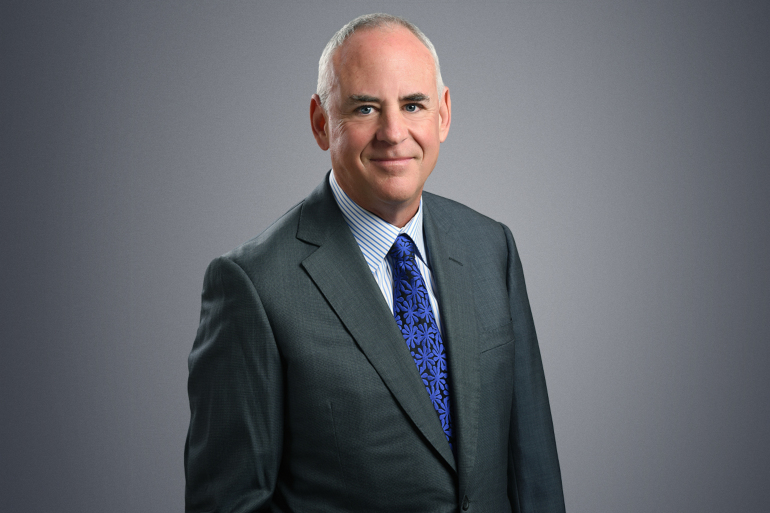
Our moderator, Allen Matkins partner John Condas, says cities are open to getting development approved because they want impact fees. The challenges include CEQA "bounty hunters"—lawyers who sue projects, hoping for a quick settlement—and an active AQMD. Vesting maps can protect developers against new regs.

Related Professionals

John C. Condas

SUBSCRIBE

RELATED INDUSTRIES

  • Real Estate

News & Insights

Manage Subscriptions
View All
  • Contact Us
  • Terms of Use
  • Cookie Policy
  • Privacy Policy
  • Request Personal Data Information

Allen Matkins Leck Gamble Mallory & Natsis LLP. All Rights Reserved.

Facebook
LinkedIn
Twitter
Instagram

This publication is made available by Allen Matkins Leck Gamble Mallory & Natsis LLP for educational purposes only to convey general information and a general understanding of the law, not to provide specific legal advice. By using this website you acknowledge there is no attorney client relationship between you and Allen Matkins Leck Gamble Mallory & Natsis LLP. This publication should not be used as a substitute for competent legal advice from a licensed professional attorney applied to your circumstances. Attorney advertising. Prior results do not guarantee a similar outcome. Full Disclaimer